Back Pain: Causes, Symptoms, Treatment & How Physiotherapy Can Help
Back pain is one of the most common health complaints worldwide, affecting people of all ages. Whether it’s a dull ache after a long workday or a sharp pain that limits movement, back pain can significantly impact your daily life.
At Hope 2 Health Physiotherapy Clinic, we provide Physiotherapy for Back Pain in London, Ontario, using personalized treatment plans designed to reduce pain, restore movement, and help you return to your daily activities. Our experienced physiotherapists combine evidence-based physiotherapy with massage therapy and rehabilitation exercises to support long-term recovery.
Understanding Back Pain
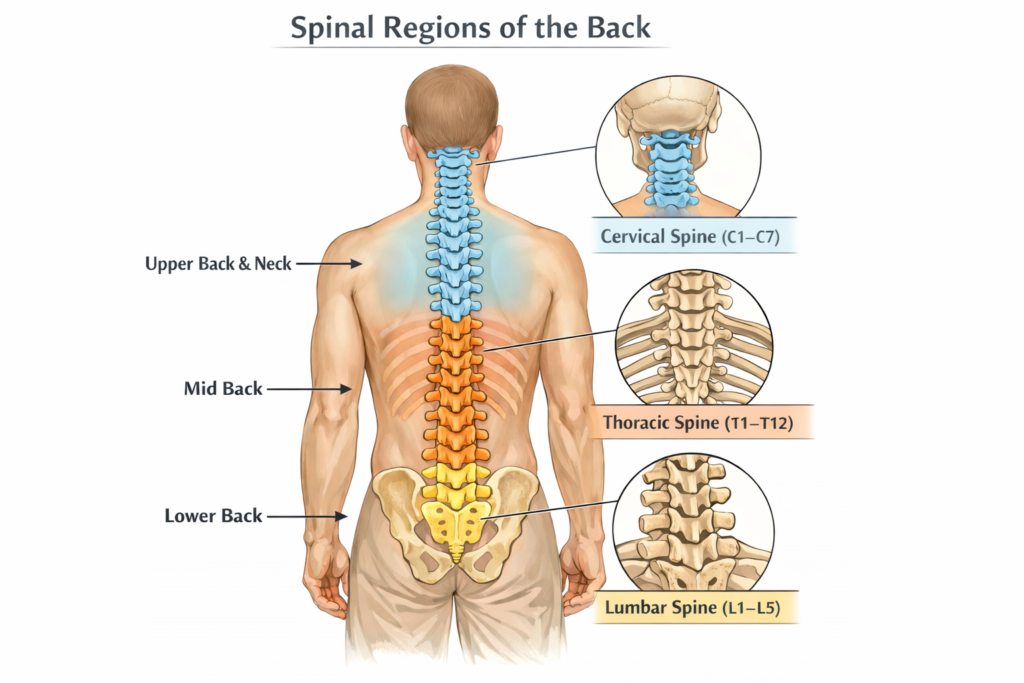
Back pain can occur anywhere along the spine, but it most commonly affects the:
- Lower back (lumbar spine) – the most common area of pain
- Mid back (thoracic spine)
- Upper back and neck (cervical spine)
Lower back pain accounts for nearly 80% of back pain cases, often related to posture, muscle strain, or lifestyle factors.
Back pain can be acute (short-term) or chronic (lasting more than 3 months).
Common Causes of Back Pain
Back pain can develop from many different factors. The most common causes include:
Muscle or Ligament Strain
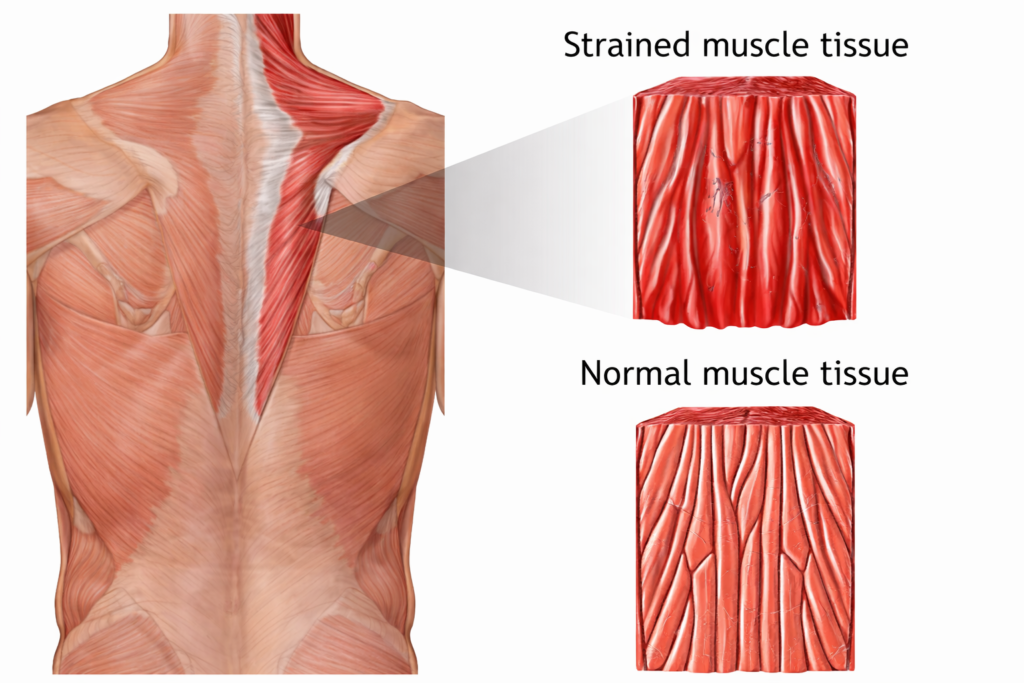
One of the most frequent causes of back pain is overstretching or tearing of muscles or ligaments.
Common triggers include:
- Lifting heavy objects incorrectly
- Sudden movements
- Sports injuries
- Poor posture
- Weak core muscles
Poor Posture
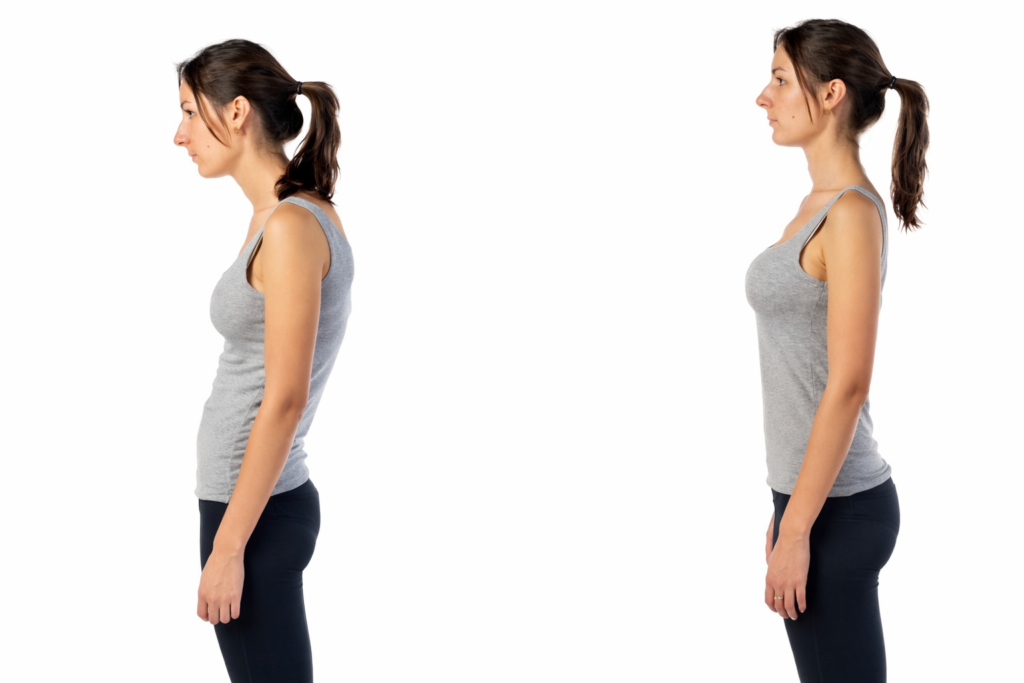
Modern lifestyles often involve prolonged sitting, especially when working at a desk.
Poor posture can lead to:
- Increased stress on spinal structures
- Muscle imbalances
- Stiffness and discomfort
Over time, this can contribute to chronic back pain.
Herniated or Bulging Disc
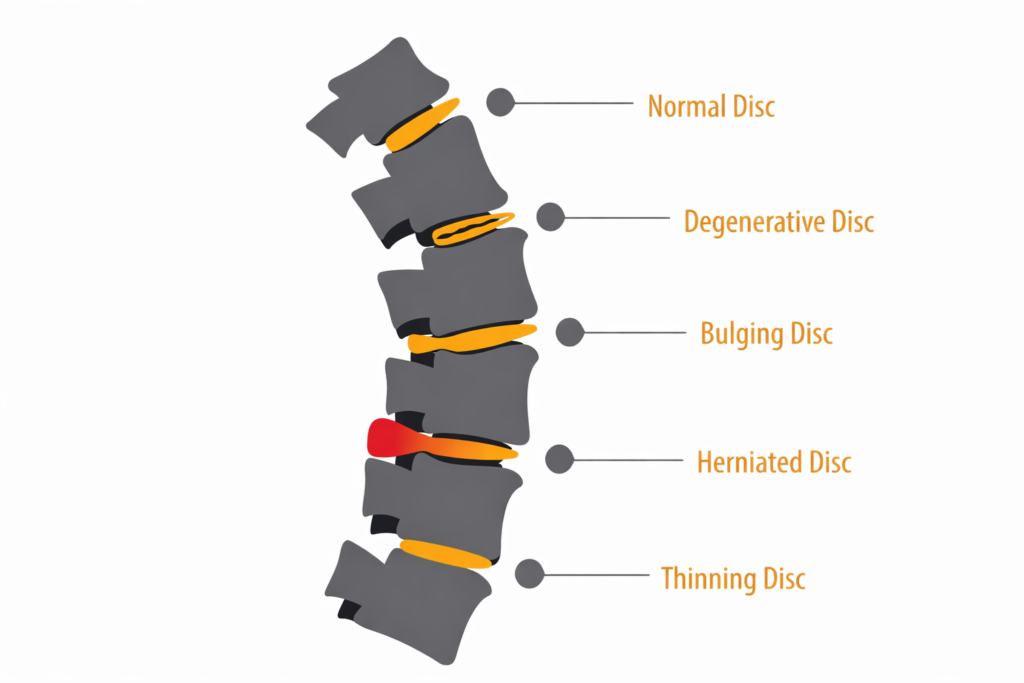
Spinal discs act as cushions between the vertebrae. When a disc bulges or ruptures, it can press on nearby nerves.
Symptoms may include:
- Back pain
- Leg pain (sciatica)
- Numbness
- Tingling
- Weakness
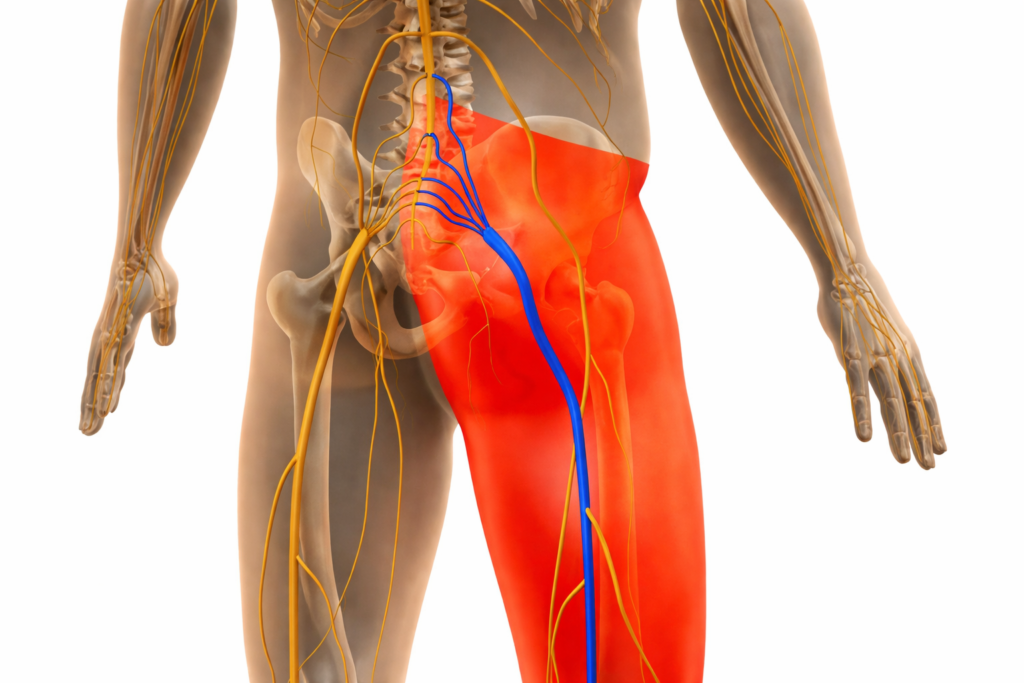
Sciatica
Sciatica occurs when the sciatic nerve becomes compressed, often due to a disc issue or spinal narrowing.
Symptoms typically include:
- Pain radiating from the lower back down the leg
- Burning or shooting pain
- Numbness or tingling in the leg or foot
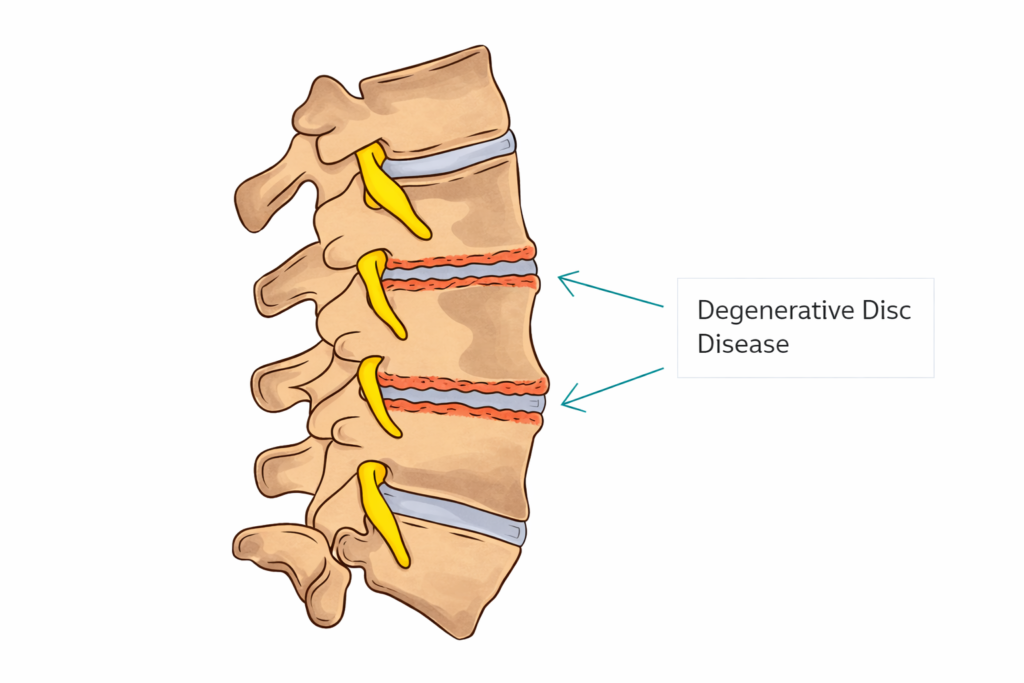
Degenerative Disc Disease
As we age, spinal discs gradually lose hydration and elasticity, which may cause:
- Stiffness
- Reduced mobility
- Chronic back pain
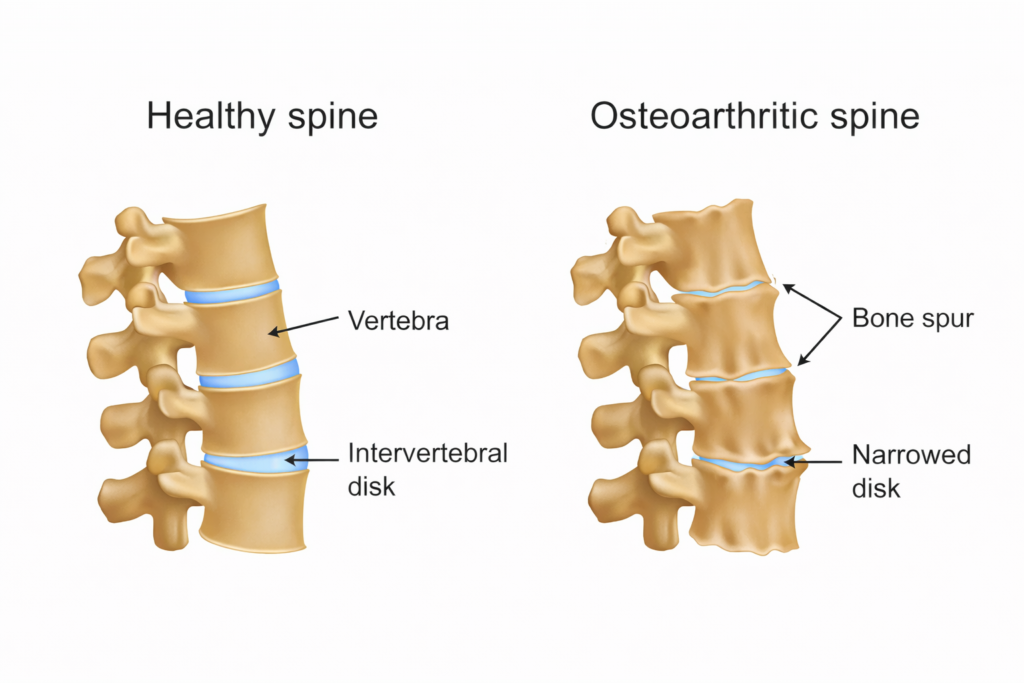
Arthritis of the Spine
Osteoarthritis can affect the spine, leading to:
- Joint stiffness
- Inflammation
- Reduced mobility
In some cases, this may also cause spinal stenosis, a narrowing of the spinal canal.
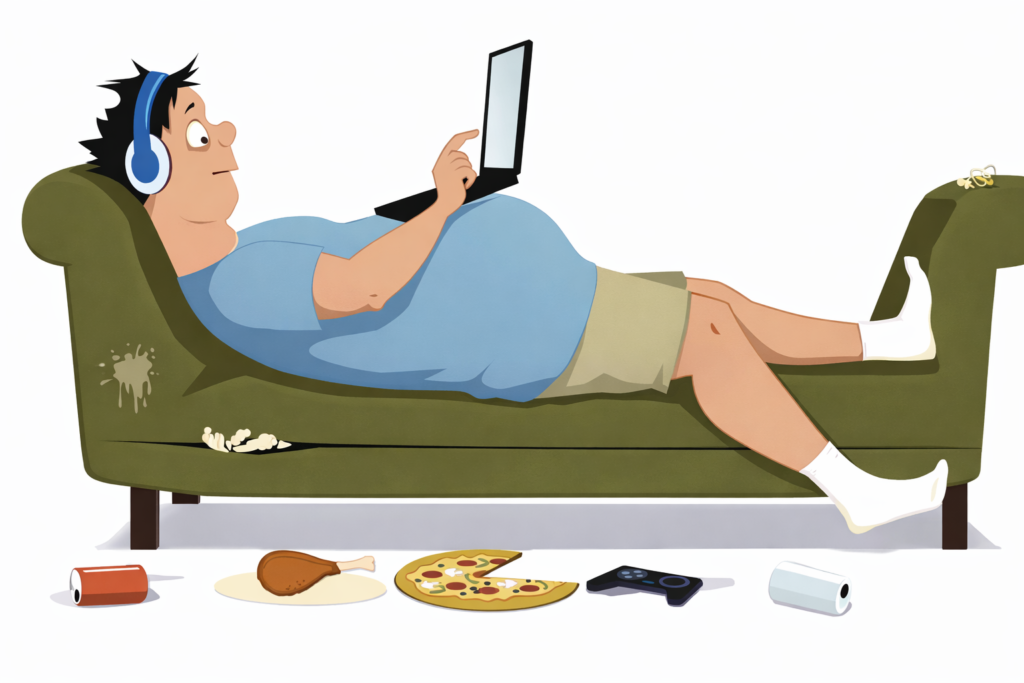
Sedentary Lifestyle
Lack of movement weakens muscles that support the spine.
This can result in:
- Muscle imbalance
- Reduced spinal support
- Increased injury risk
Common Symptoms of Back Pain
Back pain symptoms vary depending on the underlying cause.
Common symptoms include:
- Dull aching pain in the back
- Sharp or stabbing pain
- Muscle tightness or spasms
- Reduced flexibility or range of motion
- Pain when bending, lifting, or twisting
- Pain that radiates to the legs or buttocks
- Numbness or tingling in the legs
Some people may experience pain that worsens after prolonged sitting, standing, or physical activity.
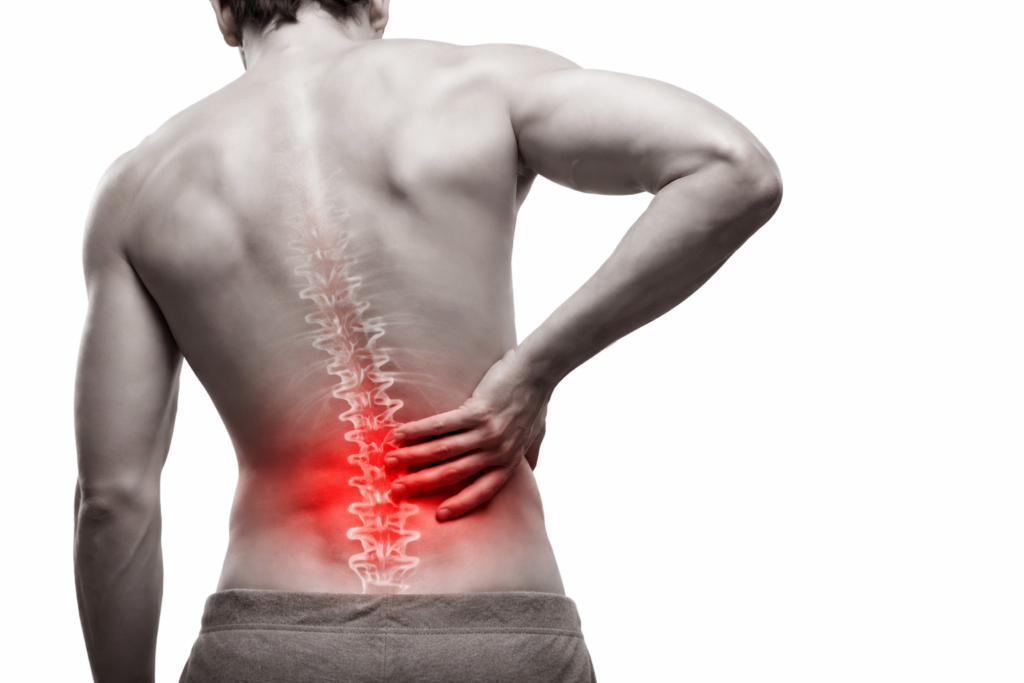

Conditions Associated With Back Pain
Several conditions may contribute to persistent back pain, including:
- Lumbar strain
- Herniated disc
- Sciatica
- Degenerative disc disease
- Facet joint dysfunction
- Spinal stenosis
- Scoliosis
- Sacroiliac joint dysfunction
- Postural syndrome
Proper assessment by a healthcare professional helps determine the exact cause of pain.
How Physiotherapy Helps Treat Back Pain
Physiotherapy for Back Pain in London, Ontario, is one of the most effective non-surgical treatment options for reducing pain, improving mobility, and preventing recurring back problems.
At Hope 2 Health Physiotherapy Clinic, our physiotherapists perform a detailed assessment to identify the root cause of your symptoms and create a personalized treatment plan tailored to your recovery goals.
Treatment may include:

Manual Therapy
Hands-on techniques to improve joint mobility and reduce pain.
Examples include:
- Joint mobilization
- Soft tissue release
- Myofascial techniques
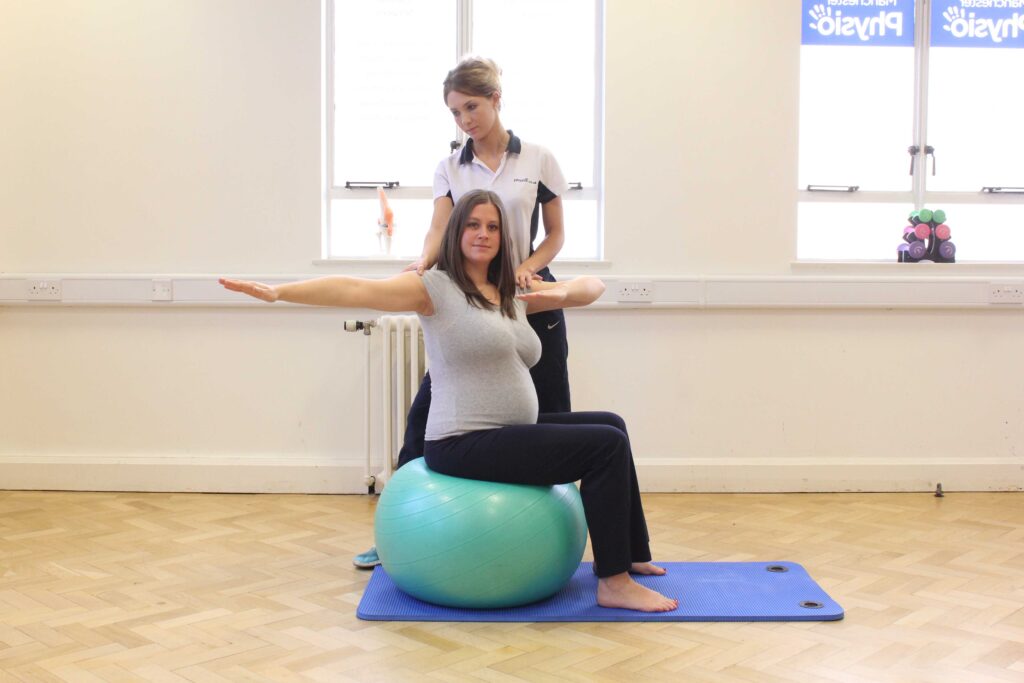
Exercise Therapy
Targeted exercises help strengthen the muscles supporting your spine.
This improves:
- Stability
- Posture
- Movement control
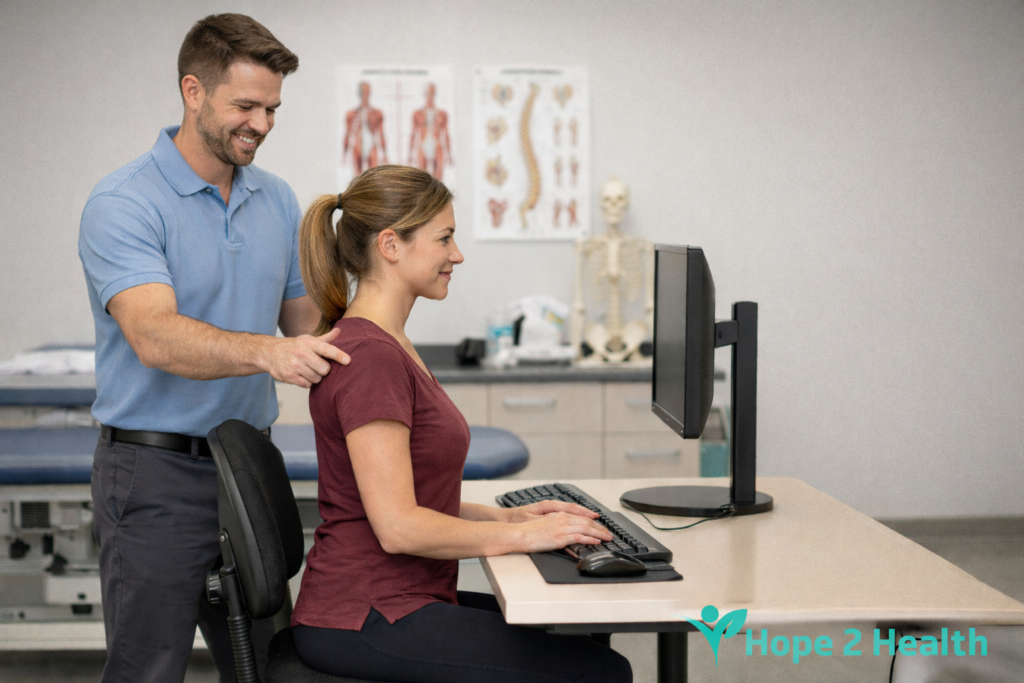
Posture Correction
Physiotherapists provide guidance on proper sitting, standing, and lifting techniques.
Postural correction reduces strain on the spine and prevents recurrence.
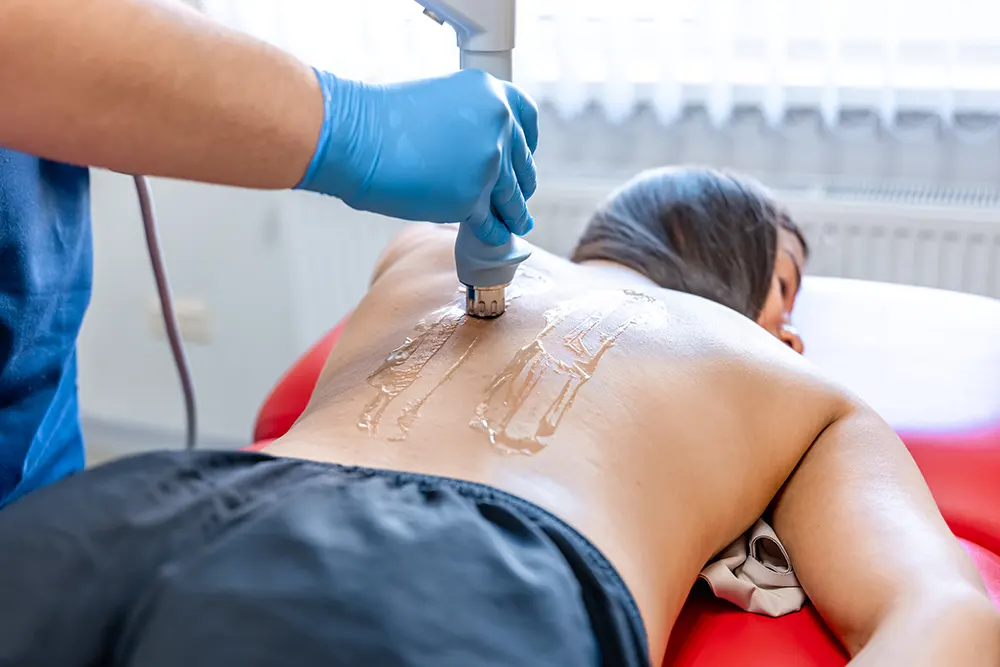
Modalities for Pain Relief
Additional treatments may include:
- Shockwave therapy
- Laser therapy
- Heat or ice therapy
- Electrical stimulation
These therapies help reduce pain and inflammation.

Education and Prevention
A key part of physiotherapy is teaching patients how to:
- Protect their spine
- Improve body mechanics
- Maintain long-term spinal health
How Massage Therapy Can Help Back Pain
Registered Massage Therapy (RMT) can significantly improve back pain by:
Massage therapy is often combined with physiotherapy to optimize recovery and reduce pain faster.
Home Exercises for Back Pain
Performing gentle exercises can help reduce stiffness and strengthen supporting muscles.
Always consult a physiotherapist before starting exercises.
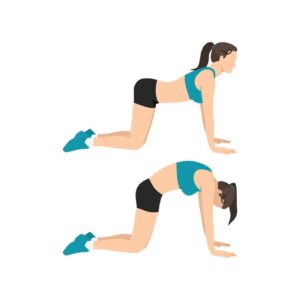
Cat-Camel Stretch
Improves spinal mobility.
Steps:
- Start on hands and knees.
- Arch your back upward.
- Slowly drop the stomach and lift the head.
- Repeat 10–15 times.
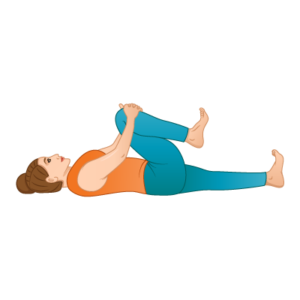
Knee-to-Chest Stretch
Relieves lower back tension.
Steps:
- Lie on your back.
- Pull one knee toward your chest.
- Hold for 20 seconds.
- Switch legs.
Repeat 3–5 times.
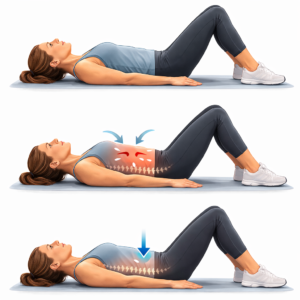
Pelvic Tilt
Strengthens core muscles.
Steps:
- Lie on your back with knees bent.
- Tighten your abdominal muscles.
- Flatten your lower back against the floor.
- Hold for 5 seconds.
Repeat 10–15 times.
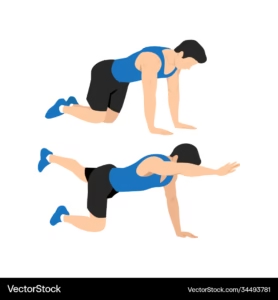
Bird Dog Exercise
Improves core stability.
Steps:
- Start on hands and knees.
- Extend opposite arm and leg.
- Hold for 5 seconds.
- Switch sides.
Repeat 10 times.
When Should You Seek Treatment?
You should seek professional care if:
- Pain lasts longer than 1–2 weeks
- Pain is severe or worsening
- Pain radiates down the leg
- You experience numbness or weakness
- Pain follows an accident or injury
- Back pain interferes with sleep or daily activities
Early treatment often prevents the condition from becoming chronic.Your Attractive Heading
Meet Our Experienced Physiotherapists

Bhoomika Pathak
Registered Physiotherapist/ Clinical directorBhoomika delivers expert pelvic health, acupuncture, concussion, pediatric, and musculoskeletal care with personalized rehabilitation plans.

Umma Salma
Resident PhysiotherapistSalma specializes in musculoskeletal, neurological, pediatric, and rehabilitative settings.

Akshita Baidhwan
Resident PhysiotherapistAkshita specializes in musculoskeletal, acupuncture,neurological, concussion, and rehabilitative settings.

Krupita Mehta
Resident PhysiotherapistKrupita specializes in musculoskeletal, neurological, concussion, and rehabilitative settings.