Muscular Dystrophy and Pediatric Physiotherapy
What Is Muscular Dystrophy?
Muscular dystrophy (MD) refers to a group of genetic conditions characterized by progressive muscle weakness. The most common childhood form is Duchenne Muscular Dystrophy.
🔗 Muscular Dystrophy Canada
https://muscle.ca
How Muscular Dystrophy Affects Movement
Children with MD may experience:
- Muscle weakness in the hips, legs, or arms
- Fatigue with physical activity
- Difficulty with stairs or rising from the floor
- Changes in walking patterns over time
Management focuses on function and quality of life, not cure.
Role of Physiotherapy in Muscular Dystrophy Care
Physiotherapy plays a supportive role by:
- Maintaining joint mobility
- Supporting safe physical activity
- Promoting energy conservation strategies
- Preventing secondary complications such as contractures
🔗 National Institutes of Health – Muscular Dystrophy
https://www.ninds.nih.gov/health-information/disorders/muscular-dystrophy
What Physiotherapy Care Looks Like
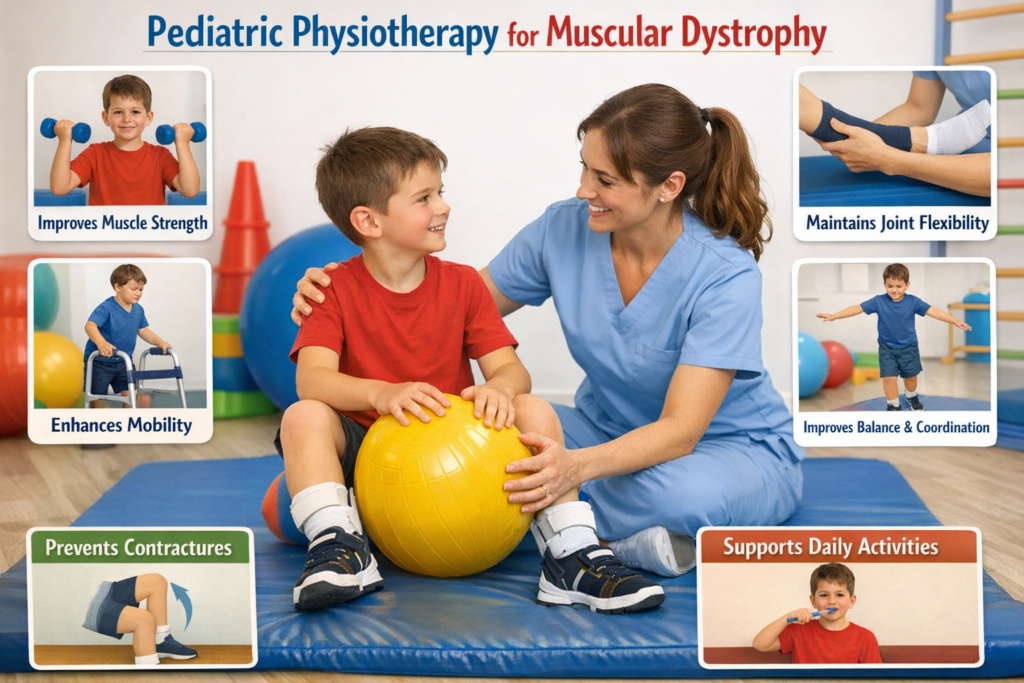
Physiotherapy programs are:
- Carefully monitored
- Adapted to disease progression
- Coordinated with medical teams
Physiotherapists may also:
- Provide guidance on assistive devices
- Educate families on safe movement
- Support transitions as mobility needs change
Meet Our Expert Pediatric Physiotherapist

Bhoomika Pathak
Registered PhysiotherapistFamily-Centred, Long-Term Support
Physiotherapy supports not just physical needs but also:
- Independence
- Participation in school and social activities
- Family confidence in managing daily movement
Our clinic provides compassionate physiotherapy support for children living with muscular dystrophy, working closely with families and care teams.